

QUERKOPF ARCHITEKTEN.
Querkopf Architekten is committed to challenging conventional wisdom. We hold ourselves to the standard of exceeding expectations, examining each project from every angle to develop visions that we bring to life with passion and expertise.
For every project, we strive to create a solution that is uniquely suited to its location, rather than simply replicating our previous work.
We support our clients across the full spectrum of architectural and construction management services. In addition, we provide consulting services during the early phases of concept development and project planning, or assume overall responsibility for portfolio optimization on behalf of asset management firms.
From real estate development through to completion, Querkopf Architekten offers a holistic approach characterized by high reliability and exceptional value—without compromising on design.
A selection of current projects.
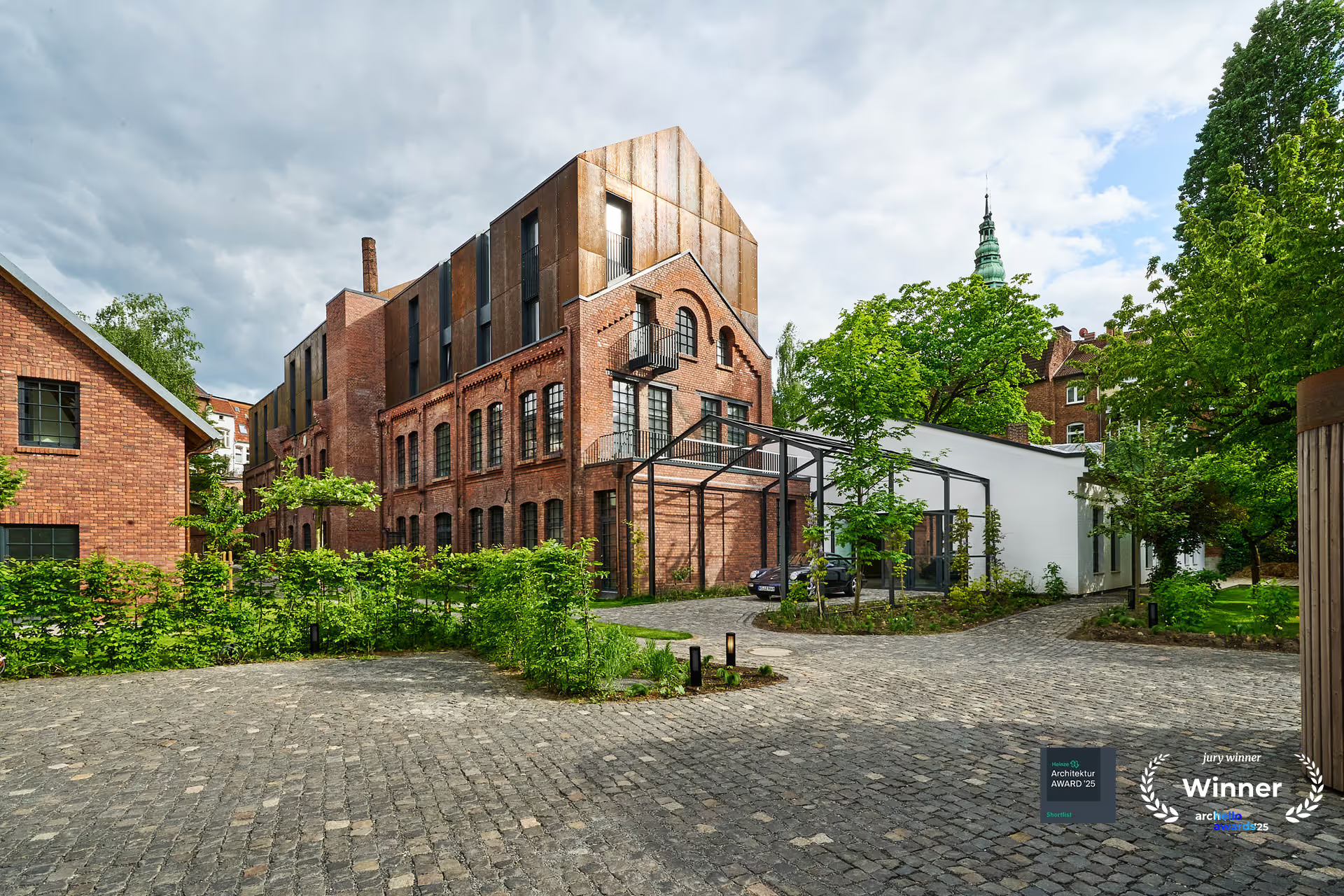
The “Vorderer Westen” neighborhood is known for its well-preserved Art Nouveau buildings, lively cafés, and restaurants. In an idyllic courtyard not far from Bebelplatz lies the old laundry building from 1900, surrounded by old fruit trees and wildflowers. Here, 30 residential units ranging from 35 to 320 square meters have been created. The new building on Dörnbergstraße forms the entrance to the “Wäschereiquartier.”
The Corten steel façade and the exposed concrete interior define the character of the units and draw conceptual inspiration from the building’s old industrial charm. The addition to the old factory building incorporates historical elements such as exposed steel beams and vertical bands of windows. A particular eye-catcher is the historic chimney in the living area. A rooftop terrace in the courtyard offers views of green roof landscaping and invites residents to relax. The project sensitively bridges the past and the present, creating a unique living atmosphere.
The Wäscherei Quartier combines historic industrial charm with modern living comfort, creating a unique residential and living space in Kassel.

Nestled in the heart of a 2,300-square-meter wooded property near Hamburg stands a villa that breaks with traditional conventions and blazes new trails with its sculptural architecture.
The villa stands in stark contrast to the surrounding nature, like an art installation set on a natural stone base that forms the underground garage. The two-story structure is clearly oriented toward the forest and follows the design concept of an L-shape that nestles against the slope, creating a sheltered interior space for the terrace. From the street side, the ground floor presents a minimalist appearance with three striking forms of exposed concrete that offer no view into the interior.
The spaces open up toward the forest through large glass panels that capture light and create a strong connection to the surroundings. The upper floor provides a design contrast with an imposing, twisted concrete structure set atop a transparent glass-and-steel framework, which ensures privacy while directing the view toward the forest. Floor-to-ceiling windows offer focused views of the natural landscape.
At Villa Neo, steel slats wrap around the building’s structure and harmoniously connect the different levels, while an atrium in the center of the house provides additional natural light.
For over 40 years, the Nautic Club in Timmendorf was a household name. Following a fire, the club was redesigned. The floor plan was restructured to make the dance floor the central focal point, surrounded by sparkling, colorful lights within a dark setting. Maritime themes are incorporated into the design without appearing too overt.
The dark shell consists of black steel plates with recessed portholes, reminiscent of the outer hull of an old steamship with its numerous rivets. The interior breaks away from this strictly grid-like shell in flowing forms, with the dance floor serving as its centerpiece. Hovering above this is a ceiling of hundreds of “nautical stars” that transform the club into a sea of light. Mirrored rods surrounding the cage of the night capture the light and reflect it into every corner of the room.
The Nautic Club Timmendorf impresses with a striking combination of stylish design and atmospheric lighting that ensures unforgettable evenings.
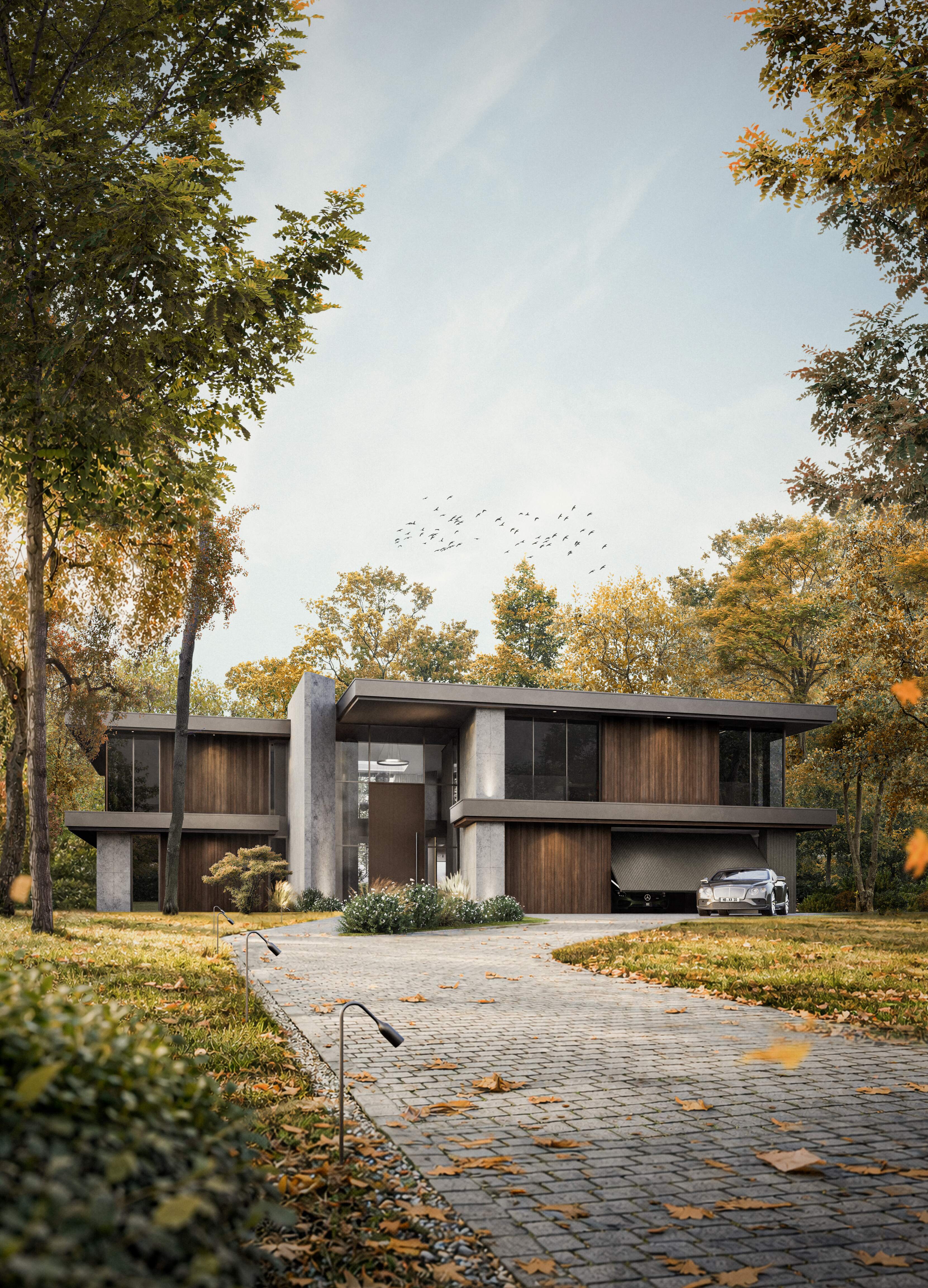
Spanning 720 square meters of living space on a 4,600-square-meter lot, it was designed as a luxurious family estate with a distinct architectural identity. Clean, horizontal rooflines, punctuated by vertical walls of natural stone, lend the building a sense of strength and timeless character. The impressive entrance area, featuring a pivoting wooden door that appears to float between glass elements, creates a first impression that is both grand and inviting.
Generous, frameless glass walls open fully onto the garden, allowing the interior and exterior spaces to blend seamlessly. The interior design features bright, spacious areas: an open kitchen, a 90-square-meter master suite, children’s rooms, a wellness area with a spa and fitness room, and a private cinema. Double-height ceilings and clear lines emphasize the sense of spaciousness and elegance. Generous terrace areas, a 9-meter-long pool, and a carefully curated selection of materials—including wood, natural stone, and metal—complete this exclusive property, nestled in a quiet location in the heart of the city.

A modern apartment building is being constructed on Dörnbergstraße in Kassel, featuring striking, clean-lined architecture and a functional design. Generous windows and a harmonious façade made of Corten steel create a welcoming living environment.
The building offers a variety of apartment layouts that appeal to both singles and families. Each apartment features a bright, open layout, with modern kitchens and balconies that extend the living space outdoors.
Shared outdoor spaces encourage residents to socialize and create a pleasant living environment.

Built in 1920, this house—just six meters wide—is situated between Hamburg’s St. Michael’s Church and the lively Reeperbahn in the heart of Hamburg. Through partial demolition and a rear extension of 25 square meters per floor, the floor plans can be adapted to meet contemporary living standards. The residential units will also be equipped with an elevator and the latest technical standards. A striking 3-level penthouse spanning 240 m² is being built on the roof, offering every amenity imaginable. Open spaces and galleries define the interior, allowing the floors to blend seamlessly.
The views of the Elbphilharmonie, St. Michael’s Church, and the St. Pauli Bunker reflect the diversity of styles that the building itself embodies. Centuries that could hardly be more different come together here, uniting the beauty of tradition with modern architecture.
![[TEXT ONLY - 1]](https://cdn.prod.website-files.com/664f34f9bd4f4eafce511267/6650c1f7c259b330611fb3a1__DSF7760.jpg)
“A blend of aesthetics and functionality.”
The exterior design of this project is based on the principle of architectural contrast, in which the warm tones of the wood blend harmoniously with the cool tones of the stone. Rough surfaces meet smooth details, while floor-to-ceiling windows expand the interior space and let in plenty of light.
The lot for this design is located on the edge of a residential area in southern Hamburg and stretches out along an old pasture bordering the forest. This distinctive lot shape allowed for a unique placement of the house in the center of the lot, far from the usual property lines. This creates a sense of seclusion, privacy, and boundless space. The house is clad in high-quality materials such as handcrafted long-format bricks and natural wood, which underscore its quality and exclusivity.
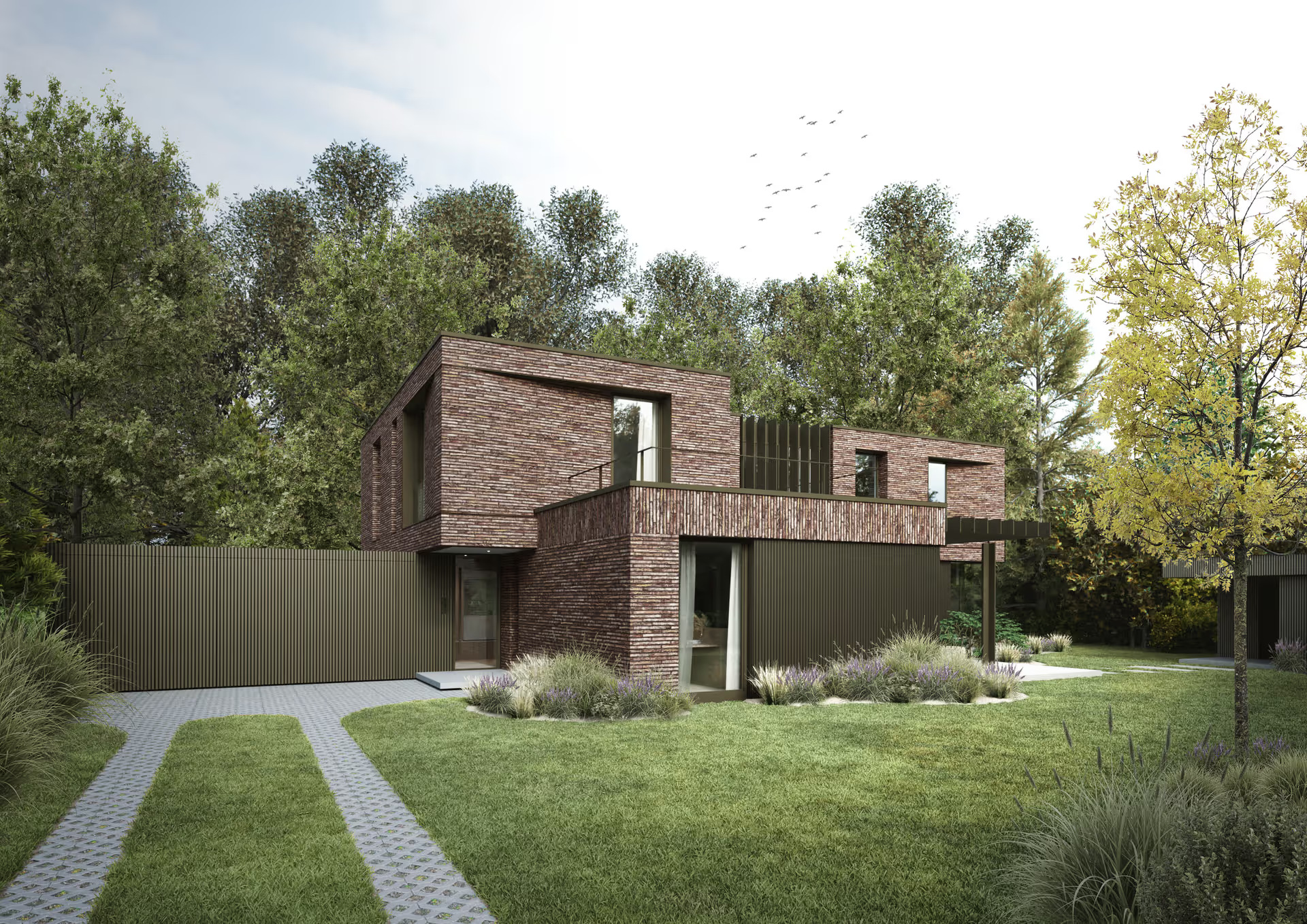
On the quiet edge of a wooded area in Hamburg, an exclusive new villa is being built on a plot surrounded by old oak trees, combining architectural clarity with sculptural expressiveness.
The villa features a distinctive L-shaped floor plan that allows for both functional zoning and an open, fluid sequence of spaces. The ground floor houses the living, dining, and kitchen areas—openly connected to one another and seamlessly linked to the outdoors through large glass surfaces. The floor plan is complemented by a guest area. A centrally located staircase leads along an open atrium to the upper floor, where the private retreat with bedrooms and associated bathrooms is located.
The building’s exterior is defined primarily by its high-quality, elongated clinker brick facade, which shimmers in shades of red and black. The facade surfaces, which partially fold inward, lend the villa’s clean-lined form a sculptural depth, making the building appear as if cast from a single mold. Another defining facade element is the delicate slats made of bronze-colored anodized aluminum. They contrast with the solid clinker and, together with the large-scale glass elements, create an interplay of light, shadow, and transparency.
The garage is formally derived from the main structure and is entirely clad in bronze-colored metal panels, allowing it to blend harmoniously into the overall volume and consistently extend the architectural design.
“Bringing time and space together through precise design and high-quality materials.”

The compact structure spans two stories and stands out for the varied materials used in its façade, as well as for the cantilevered ceiling panels, which lend the building an impressive sense of lightness.
The façade is made of heat-treated wood, metal, and durable clinker bricks, while the expansive panoramic windows—some spanning two stories—create an open and light-filled interior.
Villa Rehweg harmoniously blends the natural surroundings with modern architectural design. It emphasizes the balance between the existing and the new, thereby creating a unique living atmosphere.
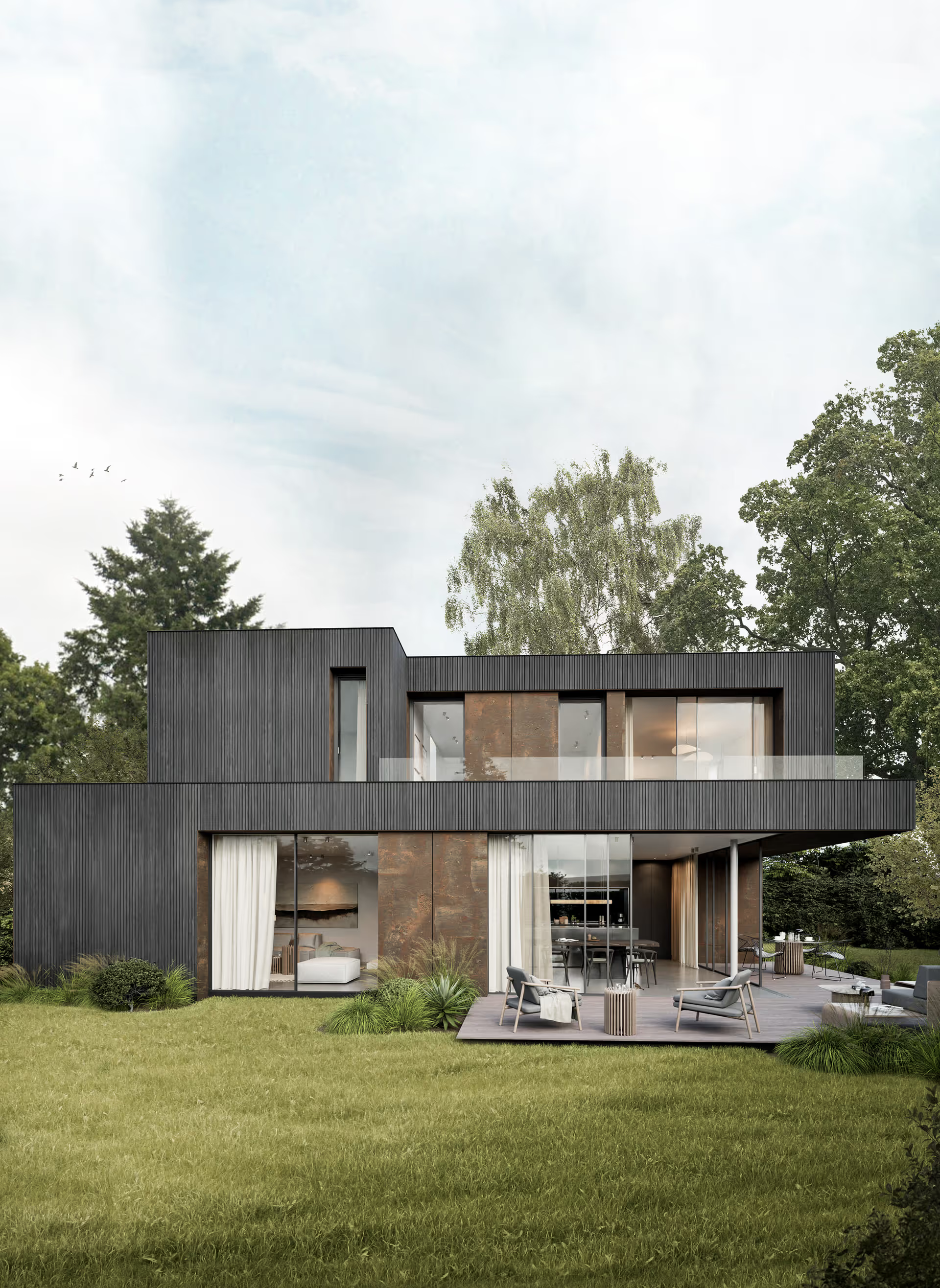
Located in the quiet residential neighborhood of Othmarschen, not far from the Elbe River, this contemporary villa was designed with a clear rectangular floor plan in accordance with the zoning plan. Despite this simple geometry, the goal was to refine the basic form and give it character: through recesses, offsets, and slanted facade surfaces, the volume is given rhythm and the rigidity of the orthogonal building line is softened.
The entrance area is clearly defined by the facade’s sloping, stepped design and the use of Corten steel, whose warm hue creates an intriguing contrast to the wooden cladding. Upon entering the house, a central hallway organizes the layout and leads to all main areas of the ground floor: the staircase, utility room, guest room, and the spacious, light-filled living, dining, and kitchen area, which opens up to the garden and the south-facing terrace through large openings. The upper floor features two children’s rooms with a shared bathroom and a spacious master suite. Each room has direct access to a terrace (private or shared), creating a close connection between the interior and exterior spaces.
The house is minimalist, modern, and functional, featuring clean lines and spacious proportions. Its exterior design is defined by the interplay of two raw, durable materials: charred wood and Corten steel. This combination gives the villa an authentic, distinctive character and subtly sets it apart from the surrounding residential buildings.

This design for a wooden villa features a simple, grid-based floor plan that allows for quick and cost-effective construction. The front facade is almost entirely closed off, resembling a wall elevation, with the roof and facade crafted from a single material and designed with geometric logic and precision.
A spatial marvel, so to speak, built on a clear grid that fades into the garden. The minimalist stainless steel panels on the facade are built to last and reflect their surroundings in an aesthetically pleasing way.

The entrance hall connects the architectural ensemble at Siegfried-Wedells-Platz, consisting of the historic “Wedells” building, a structure from the 1990s, and the atrium situated between them. The new lobby “flows” into the urban space as an expressive extension of the glass atrium and opens up with a widely cantilevered roof that, clad in solid surface material, appears like a sculpture on the forecourt. The south side features a simple glass façade to highlight the historic building, while on the north side, the roof becomes the façade. Two “fingers” extend down to the ground here, giving the building a striking rear profile.
The roof consists of over 100 mineral-based panels that are invisiblyattachedto asteeland wood substructure. The rectangular structure beneath the roof is surrounded by an almost six-meter-high, frameless glass façade. The interior is column-free, as the loads are transferred to the façade posts via steel beams. A specially developed revolving door with an invisible air curtain completes the innovative design.
The Hanse Merkur building features an impressive lobby that blends historical heritage with modern architecture, setting new standards with its sculptural roof and innovative design.

Located directly on Büsingpark and adjacent to the Büsing Palais, the ParkTower offers an impressive view of the river to the north and a spectacular view of the Frankfurt skyline to the west. A key objective of the project is to break through the barrier created by the major thoroughfare and establish a connection between the city center and the riverfront, thereby enabling seamless integration into the urban landscape.
The architecture of the ParkTower is inspired by the natural form of the horsetail plant, with the different “stems” representing various functions. The lower section houses student housing units, followed by a hotel area above, and residential apartments are planned for the upper section. The base level provides space for public use and revitalizes the neighborhood through a comprehensive cultural and recreational area. Office space is planned in the second standalone building of the complex. Green terraces not only create an oasis in the midst of the urban environment but also improve the quality of life for residents and visitors.
The ParkTower thus represents not only architectural innovation, but also a sustainable and livable future in urban development.

The new three-story building, complete with an underground parking garage, blends harmoniously into the existing neighborhood of detached villas and mature trees. The façade design reflects the desired elegance through its timeless aesthetic and choice of materials. The centerpiece of the villa is the curved, light-filled staircase spanning two floors.
A grand entrance hall welcomes residents and leads them to the common and private areas. Floor-to-ceiling windows effectively bring the lush outdoor space into the interior. The open dining room, with direct access to the garden, flows seamlessly into the living area, which features an open fireplace and carefully selected furnishings. The timelessly elegant ambiance is reflected in every detail of the high-quality finishes.
Vill Huu stands out for its seamless integration into the surrounding landscape and its timeless façade design.

Located in the idyllic town of Seevetal, nestled between forests and rivers, this villa combines a peaceful, natural setting with easy access to the city.
The single-family home has been completely renovated and now meets the latest energy standards. A new roof structure and effective insulation ensure comfortable temperatures year-round. The new brick facade gives the house a modern look, while a new wooden addition creates spacious, open rooms.
The Cubist façade features striking diagonal wooden slats and SkyFrame glazing, which floods the rooms with abundant sunlight and offers a breathtaking view of the lake. Here, wood and stone merge in Cubist forms to create a harmonious blend of old and new.
“The old gives rise to the new and creates timeless elegance.”

A modern office building has been constructed in Hamburg-Langenhorn; with two full stories and an open parking level, it is designed to meet the needs of today’s modern workplace. The main entrance is located on the west side, providing an optimal working environment for approximately 30 employees.
The office building has a clear layout with well-defined office, ancillary, and circulation zones that facilitate easy navigation within the building. The two floors are connected by a stairwell and an internal spiral staircase. Ancillary rooms and areas not in constant use, such as the server room, are located in the part of the building that does not receive natural light. In addition, an open parking level provides space for 13 cars as well as storage for bicycles and building services.

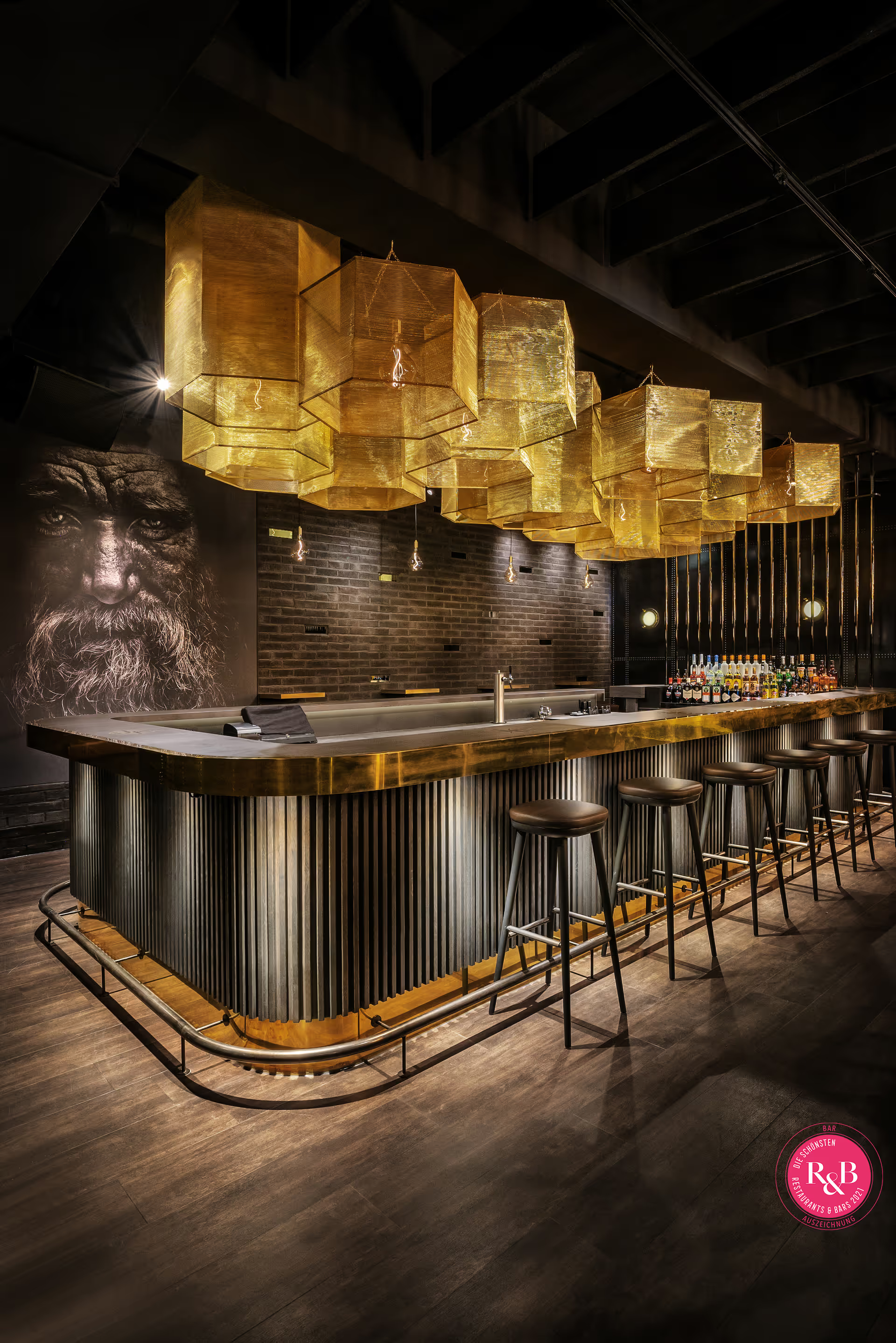
Located in the heart of bustling Große Freiheit, the BROOKLYN CLUB stands out with its fully enclosed brass and brick façade, creating an elegant contrast to the LED-lit façades of the surrounding area.
The exterior wall, made of coated, gold-colored metal panels set against black bricks, creates a fascinating grid pattern that draws the eye. Only a large black steel door marks the entrance and leads guests inside. Here, the exterior design is carried through in a monolithic brass counter. On the way to the dance floor, one passes through a cube of mirrors that appears artfully inserted, opening up diverse perspectives and visual connections within the space. Organically shaped rows of seating with round tables and pyramid-shaped, ascending platforms surrounding the dance floor create an atmosphere where guests can move freely and fluidly.
With its design featuring organic forms, the Brooklyn Club appeals to all the senses and evokes a deep sense of harmony.

The exterior design of this project is based on the principle of architectural contrast, in which the warm tones of the wood blend harmoniously with the cool tones of the stone. Rough surfaces meet smooth details, while floor-to-ceiling windows expand the interior space and let in plenty of light.
The site for this design is located on the edge of a residential neighborhood in southern Hamburg and stretches out along an old paddock bordering the forest. This distinctive shape of the lot allowed for a unique placement of the house in the center of the property, well away from the usual property lines. This creates a sense of seclusion, privacy, and boundless space.
The house is clad in high-quality materials such as handcrafted long-format bricks and natural wood, which underscore its quality and exclusivity.

On the fifth floor, 2,000 individually controllable LEDs flash across the room, while 100 black mirrors refract the light in every direction like a sparkling diamond. A special attraction is the city’s largest disco ball, measuring 2.50 meters in diameter and weighing 280 kilograms. As a guest, you move fluidly through the space, easily switching between the bar counters, the rooftop terrace, or the dance floors on both levels. With its modern design and exclusive atmosphere, the club attracts a trendy crowd.
With its stylish decor, high-quality sound system, and top-notch lighting, the Noho Club guarantees unforgettable nights filled with music and dancing.

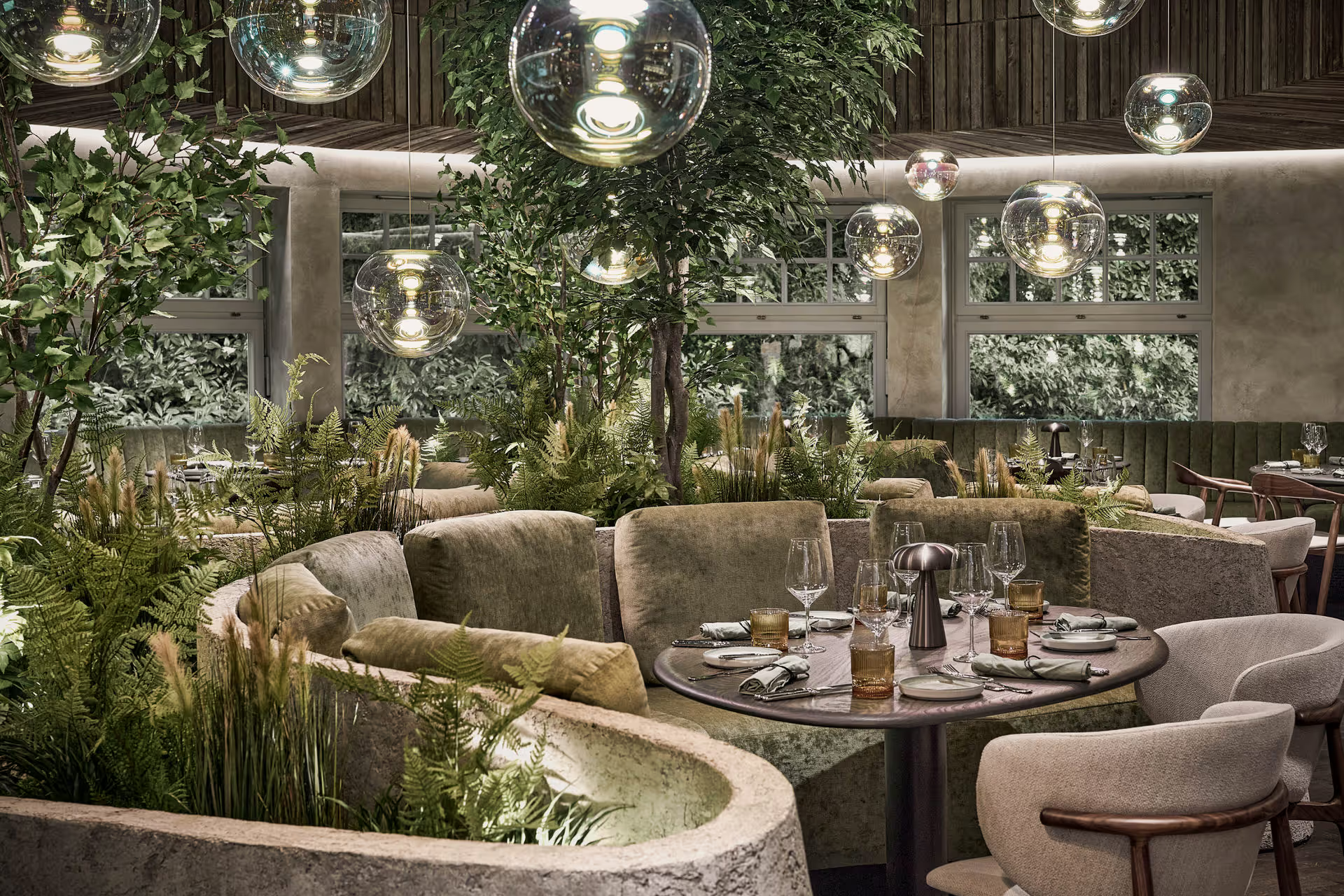
The GAGA Club’s design seamlessly blends restaurant and nightclub: tactile materials and coordinated colors in the restaurant area contrast with the acoustic energy and lighting effects of the nightclub. Two stairwells divide the club into distinct zones: the entrance, coat check, bars, dance floor, rooftop terrace, and kitchen and restroom areas.
A rusted steel grid spans the ceilings and walls, culminating in a spatial sculpture above the bar. Smoked oak and brass form an elegant bar unit, surrounded by turquoise-upholstered seating niches and height-adjustable wooden tables. The wall design varies between wooden slats, mirrored surfaces, and fabric panels, while brass panels reflect the light and colored lighting underscores the club’s dynamic atmosphere.
The challenge was to harmoniously integrate the "Dinner & Dance" concept by meeting the requirements of both a restaurant and a nightclub.

The property, situated slightly away from the town center and bordered by railroad tracks, opens up to the picturesque Ober-Eider River. The entrance to the property, which passes under the railroad tracks, creates an inviting gateway that leads visitors directly into the heart of the action.
The architectural challenge was to take advantage of this unique location and create a space that is not only functional but also offers a rich experience. On Building Site B, we drew inspiration from the classic gabled house style found locally, which is typical of maritime port cities and creates a vibrant urban atmosphere. On Building Site A, however, a modern sculpture rises up, its striking contours and view over the city evoking a majestic two-masted ship. The building’s pronounced corners and edges give it a sculptural presence, making it appear almost like a work of art in this square.
Obereiderhafen brings together new open spaces, transitional areas, and public squares that foster lively interaction among users, visitors, and residents.

A year-round panoramic restaurant combined with a summer beach club. The pool house on the rooftop of an active parking garage in Schwerin embodies an ambitious beach club project that stands out for its flexibility and innovative design.
Spanning two different levels of the parking garage roof, the design plays with varying volumes and offers visitors a variety of perspectives. The panoramic restaurant, nestled in the upper section of the rooftop, will attract guests year-round with its elegant design and breathtaking views of the city and castle. At the same time, during the summer, a section transforms into a lively beach club featuring a large infinity pool and an outdoor bar, promising a lively and relaxed atmosphere.
The pool house, with its year-round panoramic restaurant and beach club—which opens in the summer—creates a sense of vacation and relaxation.
“Tradition meets modernity through designs that touch the heart.”

Playa Games' office is located in a prime location, nestled between historic buildings and modern structures. The inspiring surroundings foster creativity and offer employees a diverse and vibrant work environment.
The goal of the renovation was to incorporate Playa Games’ values and vision—dynamism, openness, and progressiveness—into the architecture. Across multiple floors, floor plans were restructured, walls were removed, and communal spaces were created to foster a collaborative work environment. Large windows flood the rooms with abundant natural light and offer impressive views of the urban surroundings.
The interior spaces are designed to meet the diverse needs of employees. There are quiet zones for focused work, open areas for teamwork and meetings, and cozy dining areas for relaxing breaks. The use of glass in the office building creates a transparent work environment that promotes visual openness while ensuring effective sound insulation.
State-of-the-art technical equipment and high-end furnishings ensure a high level of comfort and promote the health and well-being of employees.

Adjacent to the Bergedorf pedestrian zone lies a former commercial site that now offers space for a total of 45 new apartments.
The challenge of this project is to integrate a new building into an area characterized by Art Nouveau and brick architecture. The goal is to create an urban atmosphere with historical references that blends harmoniously into the surroundings. We have planned a five- and three-story structure that will accommodate a variety of uses for seniors, families, and students.
The floor plan design combines modern living concepts with practical layouts and a high standard of architecture and attention to detail. The façade design blends a geometric-abstract interpretation of Art Nouveau with a brick-like appearance reminiscent of the historic commercial buildings. Clear lines, both inside and out, create a building complex that integrates organically and logically into its surroundings.
Set amid the historic splendor and urban diversity of Bergedorf, this project on the former commercial site brings a breath of fresh air and a contemporary quality of life.

Our flagship project in northern Hamburg is located in a setting where hardly anyone would think to give architecture or design even the slightest consideration: on Steilshooper Allee. An area zoned for two-story buildings in the master plan will be increased to five stories thanks to our design. This will create a hotel with a total of 300 rooms. The goal was to optimize the site and develop a master plan with STRAHL-KRAFT for the entire area.
Given the predominance of industrial and commercial buildings in the area, our design drew inspiration from the existing forms and facades, resulting in a building that, at first glance, appears to be a cubist commercial structure with a windowless facade. But as dusk falls, a second look reveals that the facade is actually permeable, allowing the activity within to be seen through a fiberglass membrane.
The changing interplay of light and shadow makes the building exciting and vibrant. It invites people to pause in a place where, before, only a red traffic light could have compelled them to linger for a moment.

The complex has become an integral part of Flottbek’s streetscape and has been a fixture of the neighborhood since the Wilhelminian era. Following a complete gutting, the buildings were carefully renovated and expanded to create ten stylish, modern residential units. Stucco elements lend the building the charm of a historic structure, while loft-style interiors provide a modern living environment.
Located right along the Elbe and not far from downtown: Groß Flottbek embodies the essence of Hamburg while offering the charm of a tranquil town of its own. Thanks to its location, this villa-lined suburb is one of the city’s most popular residential areas—featuring idyllic estates, plenty of green space, and the charm of a genuine Hanseatic small town.
Flottbek has everything you need. From the charming café and the supermarket to the bakery, school, daycare center, hotels, and church—everything is right here and within walking distance.

The roof surfaces facing the courtyard have been raised, and large dormers offer impressive views of the city. The consistently open floor plan encompasses the kitchen and living area, a guest room, and a master bathroom with an adjoining bedroom. All areas open onto the courtyard-facing roof terraces, which provide additional open space.
The apartment’s atmosphere is defined by open-concept spaces, exposed structural elements, and sweeping views over the rooftops of Hamburg. As part of the renovation project, the entire building was extensively renovated and expanded to include balconies for all units, offering residents an even higher quality of life.
The Altona penthouse combines historic charm with modern design, creating a unique and inviting living environment.

A new wooden structure rises from the preserved stone foundation of an old barn, its geometric design exuding a modern aesthetic. The foundation preserves the original stones, lending the building character and authenticity. In the new structure built above it, the roof and facade form a unified whole of wood and Corten steel, creating a contemporary and sustainable appearance. Despite the limited number of openings, large windows on the south side flood the living spaces with natural light.
The interior layout has been optimized to maximize space and functionality. Each room flows seamlessly into the next, creating smooth transitions and the utmost comfort. Casa Fontana embodies a successful blend of traditional charm and modern architecture, nestled in a picturesque landscape.
Casa Fontana combines the rustic charm of an old barn with modern architecture featuring wood and Corten steel, which captures plenty of natural light through its large windows.

The single-family home underwent a complete gutted renovation to transform it into an architectural gem. The redesigned floor plan maximizes space utilization and incorporates several bedrooms, a home office, and a guest room.
Spacious, light-filled areas and a sunroom with a pool offer relaxation and respite all year round. Each room combines functionality with aesthetic appeal while offering views of the lush surroundings. A continuous line of sight from the entrance through the living room to the expansive garden creates a sense of openness and connection with nature. The heart of the villa is the elegant living room, which impresses with its high sloped ceiling and creates a unique sense of space. A stylish fireplace provides cozy warmth and a comfortable ambiance on cool evenings. The bathrooms feature elegant natural stone walls and are artfully illuminated by high-quality lighting, creating a welcoming and comfortable atmosphere.
Villa Lütjensee is a masterpiece of modern architecture that captivates visitors with its unique design and outstanding location.